
Cornerstone / Journal / Perspectives
Perspectives · 3 February 2026
What Comes First in the Gulf: The Climate or the Building?
In the Gulf, the climate writes the first line of every brief. How we design buildings that stay cool before the chillers ever switch on.
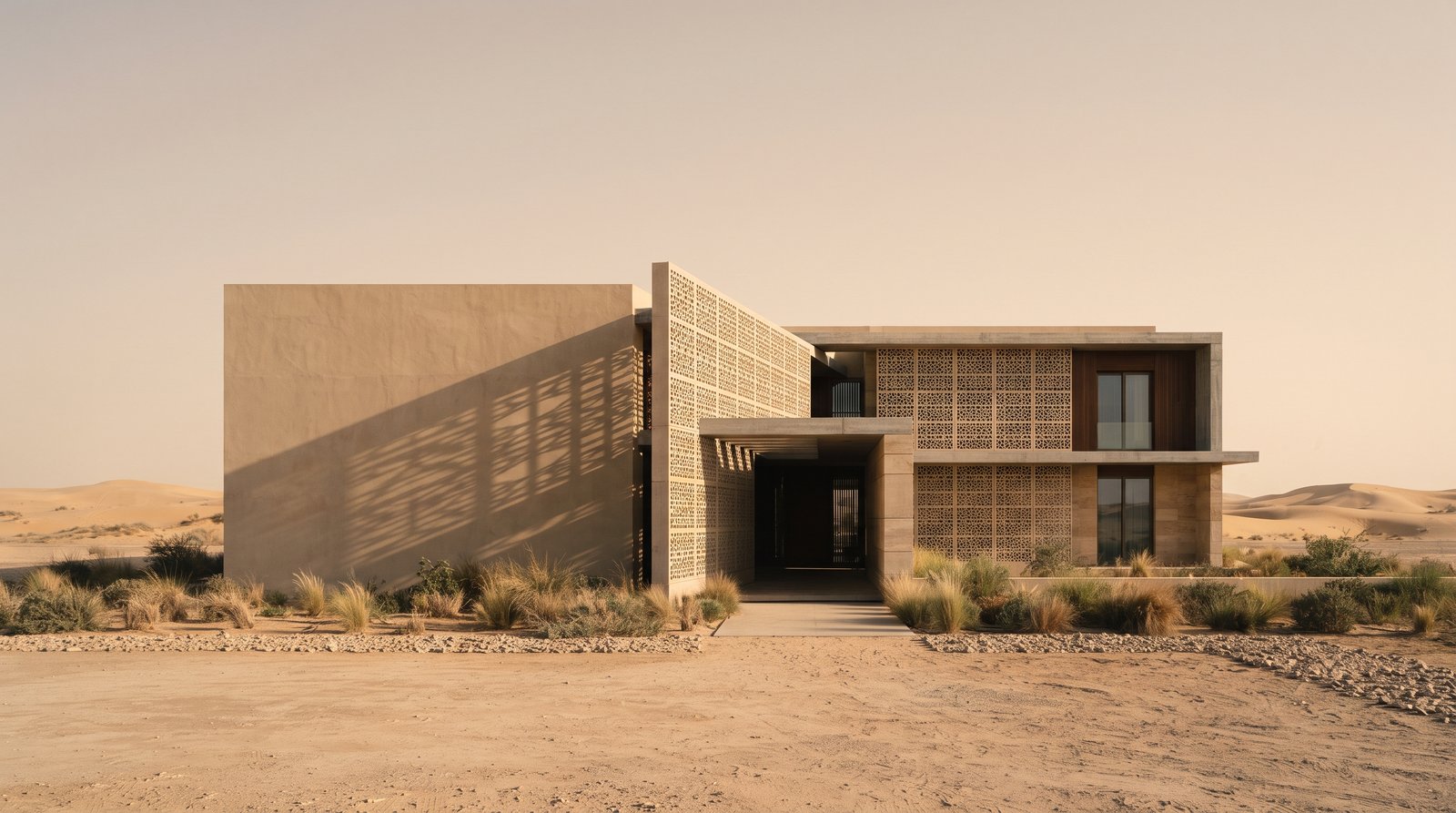
Every site we are handed in the Gulf comes with an unwritten brief. It sits above the client's wish list and the developer's feasibility study: 48 degrees in August, humidity that fogs a camera lens, and sun that hits a west façade like a blowtorch.
For a long time the region answered that brief with machinery. Seal the glass box, add more tonnage, pay the bill. That approach is ending — not because architects got sentimental about wind towers, but because energy codes, green building ratings and operating costs have made it expensive to ignore physics.
What does climate-first design actually mean?
It means orientation is decided before the elevation is drawn. Long façades face north and south. East and west walls get fewer, smaller openings. Courtyards and shaded setbacks create pockets of cooler air. Deep reveals, fins and screens do the work that tinted glass pretends to do.
Is traditional Gulf architecture still relevant?
Yes — as logic, not as costume. The barjeel, the mashrabiya and the inward-looking courtyard house were engineering solutions. We borrow the principle (shade, airflow, thermal mass, privacy) and express it in a contemporary language. A perforated aluminium screen can be as honest a response as a carved timber one.
Does it cost more?
Usually less, over the life of the building. A well-oriented, well-shaded envelope reduces cooling load, which reduces plant size, which reduces capital and running costs. The real cost is time spent thinking early — and that is the cheapest phase of any project.
Our position is simple: in the Gulf, a building that ignores its climate is not modern. It is just unfinished.
Planning a project in the GCC? [Start a conversation with Cornerstone.](/contact?enquire=1)